What Can & Can't Go In a Dumpster
Most household and construction debris is fine. A short list of hazardous materials isn't, and a few specific items carry an added fee rather than being excluded outright.
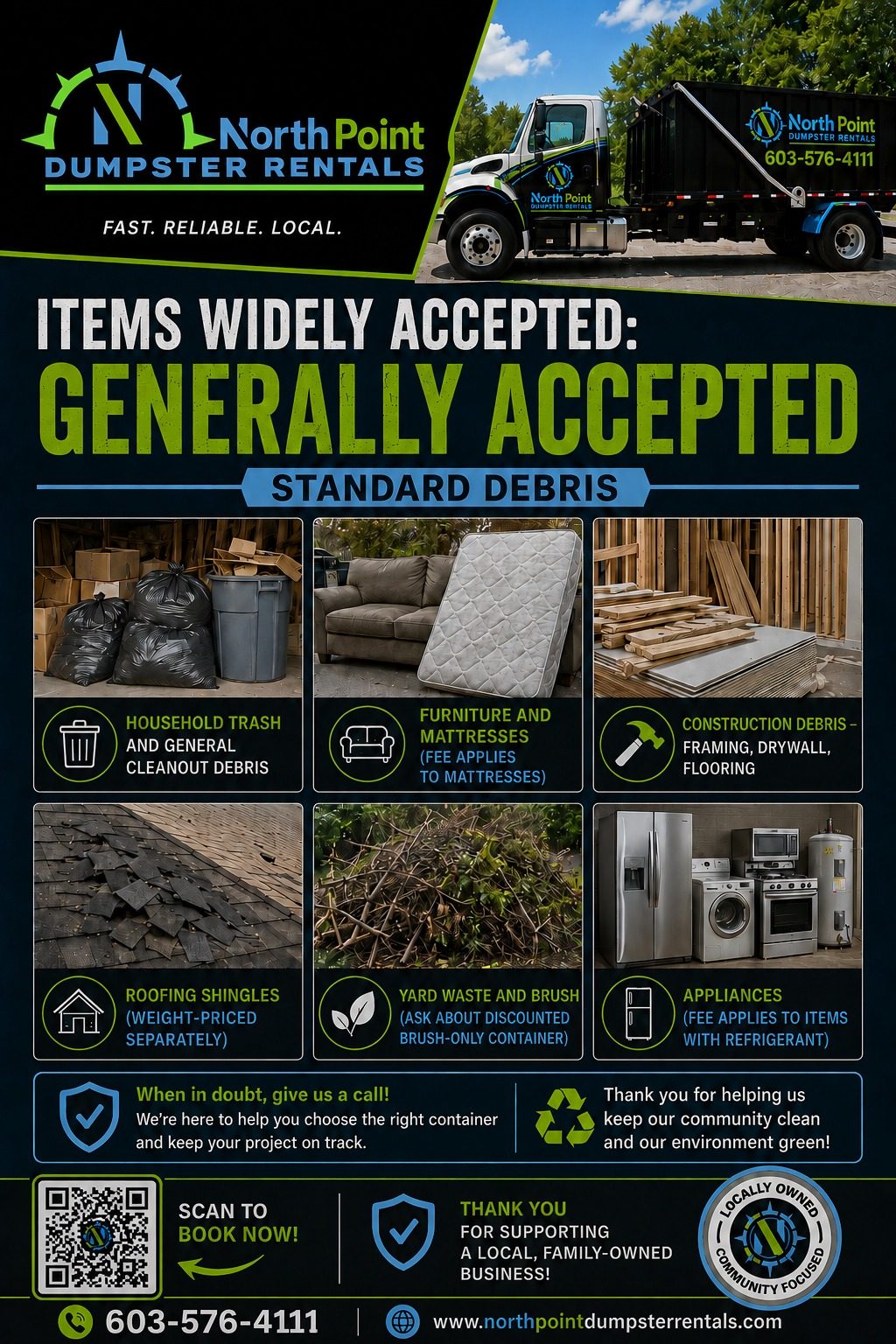
- Household trash and general cleanout debris
- Furniture and mattresses (fee applies to mattresses)
- Construction debris — framing, drywall, flooring
- Roofing shingles (weight-priced separately)
- Yard waste and brush (ask about discounted brush-only container)
- Appliances (fee applies to items with refrigerant)
 Download This Reference Sheet ↓
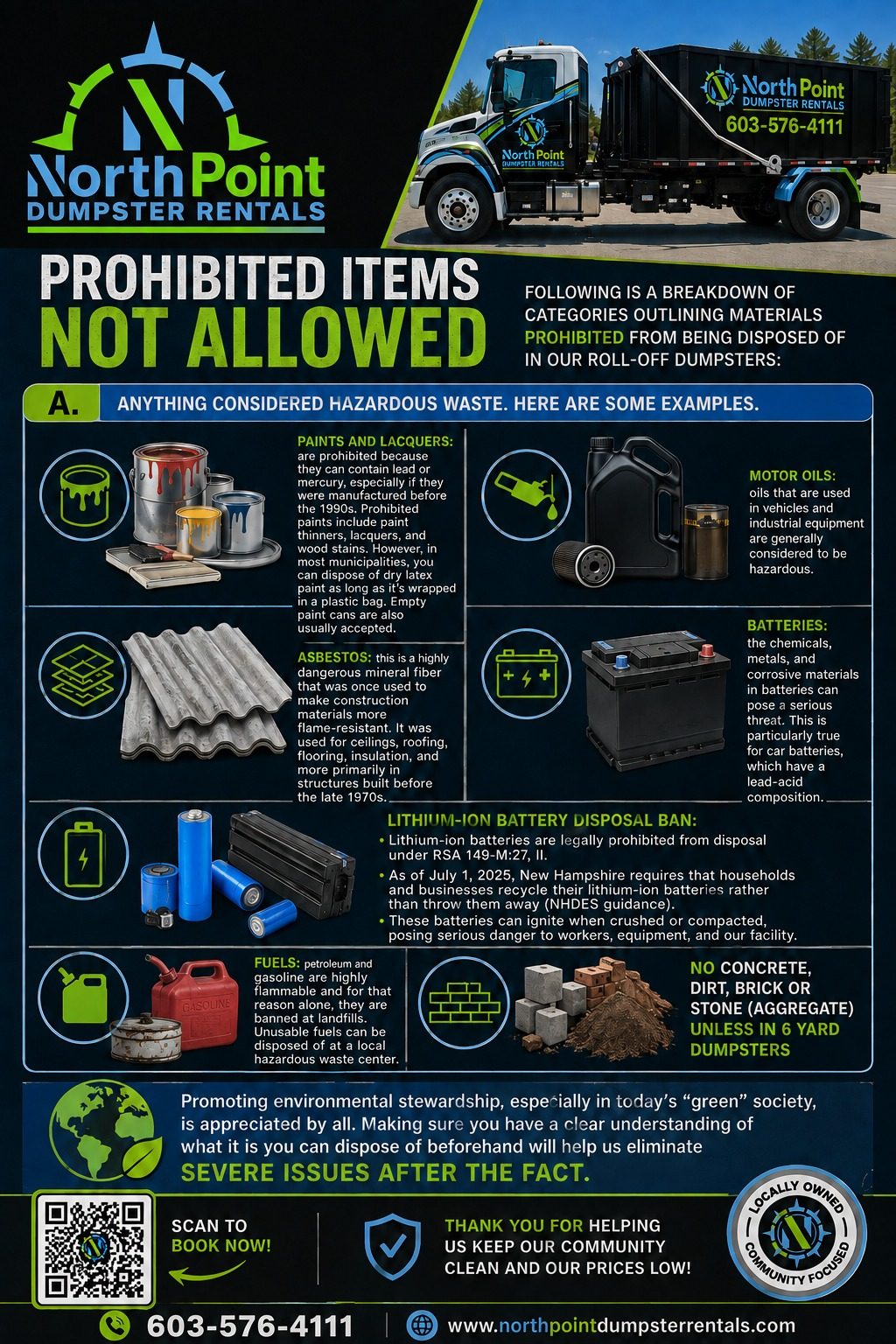
- Paints, stains, and lacquers (dry latex paint OK if bagged)
- Motor oil and other petroleum products
- Asbestos-containing materials
- Lead-acid batteries (car batteries, etc.)
- Lithium-ion batteries — banned from disposal statewide (RSA 149-M:27, II) as of July 1, 2025 — see NHDES's disposal ban guidance for drop-off options
- Flammable fuels
 Download This Reference Sheet ↓
Items With an Added Fee
These items are accepted but priced separately rather than included in a standard load, since they require special handling or disposal: tires (with or without rims, plus truck tires), mattresses and box springs, refrigerators and other appliances containing refrigerant, air conditioners, propane tanks (standard and oversized), televisions and other screens, dehumidifiers, hot tubs, and lithium-ion batteries. Ask your location for current pricing on these when you book. See our full special item fees guide for the complete list of 14 items and the specific reason each one costs extra.
Heavy Materials: Weight Matters More Than Volume
Concrete, dirt, brick, and stone are accepted only in limited quantities in a standard container — these materials are dense enough that a standard weight allowance fills up long before the container looks full. If your project is mostly aggregate or heavy debris, ask about a dedicated heavy-debris container priced specifically for that material. The same logic applies to roofing shingles: a container full of shingles can weigh three to four times what the same container weighs full of typical debris, so we size the weight allowance around your actual roof rather than a generic default.
Not Sure About a Specific Item?
Call your nearest location before you load it — it's a quick conversation, and it's the easiest way to avoid an overage charge or a container that can't be hauled as loaded. See our full FAQ for more on pricing, weight limits, and what happens if a container comes in over its allowance.
Why These Specific Rules Exist
Hazardous materials aren't excluded to make things difficult — they're excluded because standard landfills and transfer stations across New Hampshire aren't licensed to accept them, and mixing them in with regular debris can contaminate an entire load. Paint, solvents, and fuels pose a fire and chemical-exposure risk in transport; asbestos requires specialized abatement handling under state and federal rules; and lead-acid and lithium-ion batteries carry fire and environmental risks specific to their chemistry — lithium-ion in particular has caused real transfer-station fires nationally, which is part of why New Hampshire moved to ban it from standard disposal statewide.
The fee-based items (tires, mattresses, refrigerant-containing appliances, and the rest) aren't hazardous in the same way — they're accepted, just routed through a specific recycling or disposal process that costs more than standard debris handling, and that added cost gets passed through rather than absorbed or marked up.
Common Questions
What happens if a prohibited item is found in my container?
It depends on the material — some can simply be removed and billed as a restricted item, while genuinely hazardous material (like the items on our prohibited list) may require special handling that gets billed back to the account. Calling ahead if you're unsure avoids this entirely.
Is there a difference between what's prohibited and what just costs extra?
Yes — prohibited items (hazardous waste, asbestos, certain batteries) aren't accepted at all. Items with an added fee (tires, mattresses, appliances, and others) ARE accepted, just priced separately. See our special item fees guide for the complete fee-item list.
Do the accepted/prohibited rules differ by location?
The core list is consistent across all six locations, though local disposal-facility capabilities can occasionally affect specifics like exact fee amounts — always confirm current pricing with your nearest location.
What if I have a large amount of a fee-based item, like several mattresses?
The fee applies per item, so a larger quantity means a larger total fee — there's no bulk discount on restricted items. Mentioning the quantity when you book helps us confirm the container has room within the weight allowance.
Can I put yard waste and construction debris in the same container?
Yes, though mixing them means you lose eligibility for the discounted brush-only rate — if most of your load is yard waste, keeping it separate from construction debris keeps you eligible for that lower price.
Are food waste or organic materials accepted?
Small amounts as part of a general household cleanout are fine, but a dumpster isn't intended for ongoing food waste disposal — it's built for one-time project debris, not routine trash service.
What if I'm not sure whether something counts as hazardous?
When in doubt, call before you load it. A quick description of the material is usually enough for your location to tell you whether it's accepted, fee-based, or prohibited — much easier to sort out before delivery than after a container is already loaded.
Does dry paint count differently than wet paint for disposal?
Yes — fully dried latex paint (with the lid off, left to cure, then bagged) is treated as solid waste and accepted at no charge. Wet paint, oil-based paint, and stains require hazardous-material handling and aren't accepted in a standard container.