
Items That Cost Extra — And Why
Most household and construction debris is included in your standard rental. A specific, short list of items carries an added fee instead of being excluded outright — here's exactly which ones, and the real reason each one costs more.
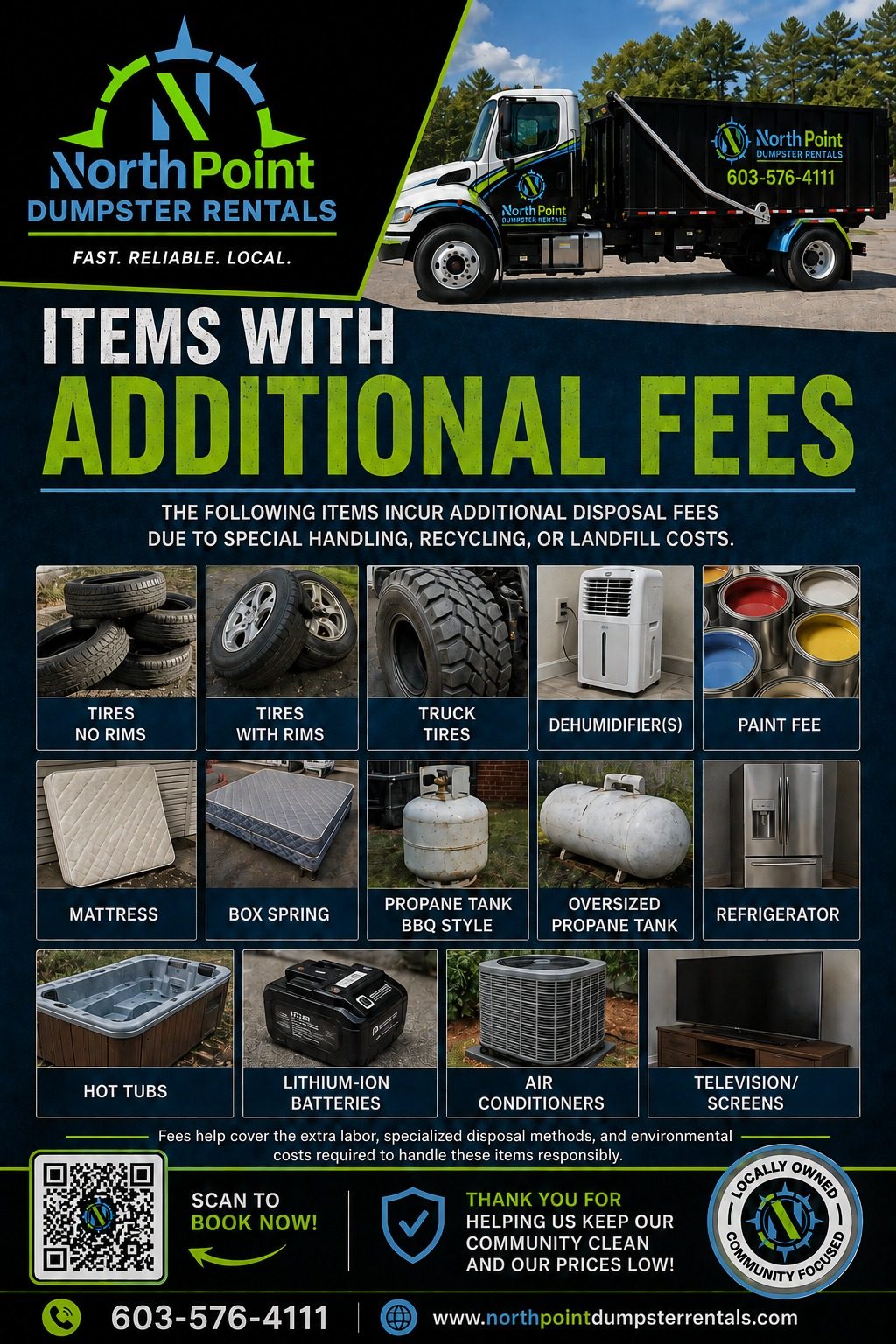
14 Items With an Added Fee
These fees cover the real extra labor, specialized disposal methods, and environmental compliance costs these specific items require — not a markup. Ask your nearest location for current pricing before you book if any of these apply to your project.
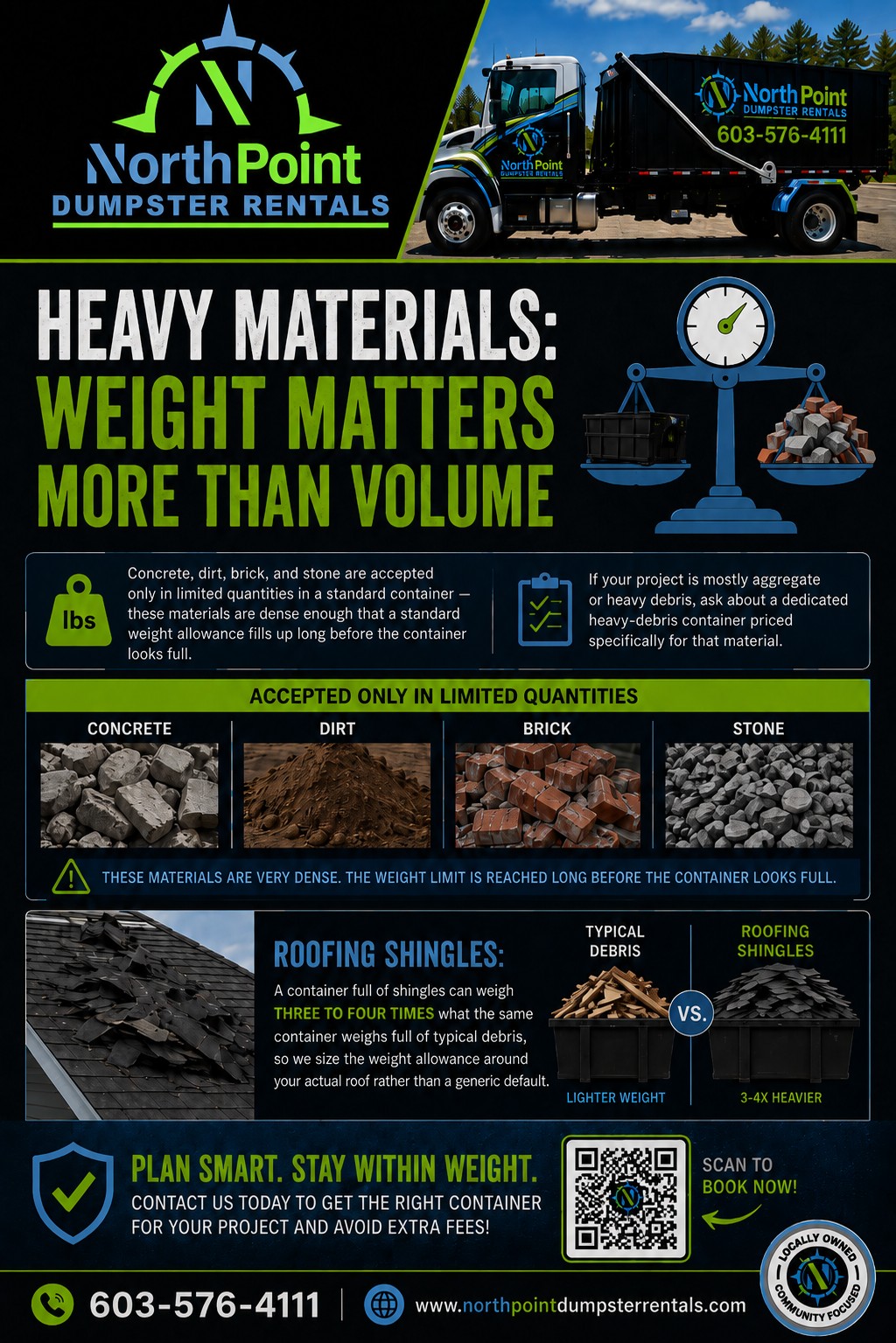
Heavy Materials: Weight Matters More Than Volume
Concrete, dirt, brick, and stone are accepted only in limited quantities in a standard container — these materials are dense enough that a standard weight allowance fills up long before the container looks full. If your project is mostly aggregate or heavy debris, ask about a dedicated heavy-debris container priced specifically for that material.
The same logic applies to roofing shingles: a container full of shingles can weigh three to four times what the same container weighs full of typical debris, so we size the weight allowance around your actual roof rather than a generic default.
Not Sure If Your Item Applies?
This page covers items with an ADDED fee — items that aren't accepted at all (paints, asbestos, motor oil, and other hazardous materials) are covered separately in our full What Can & Can't Go In a Dumpster guide. When in doubt, call your nearest location before you load it — it's the easiest way to avoid a surprise on pickup day.
Book Online →Why the Refrigerant-Recovery Fee Specifically Costs More
Refrigerators, dehumidifiers, and air conditioners share the same underlying cost driver: federal EPA regulations require refrigerant to be professionally recovered before the appliance can be scrapped or recycled, regardless of who's disposing of it. That recovery step needs a certified technician and specialized equipment, which is why these three items carry a similar fee — it's not an arbitrary appliance surcharge, it's the actual cost of legally compliant handling passed through directly.
Tires work similarly but for a different reason: most NH transfer stations and landfills charge their own tire-recycling fee upstream, since whole tires can't be landfilled directly in most facilities and need to be shredded or processed separately first.
Common Questions
Are these fees charged automatically, or only if I mention the item?
They're charged based on what's actually found in the container, whether or not it was mentioned at booking — mentioning it ahead of time just means there's no surprise at pickup, not that the fee is optional.
Do these fees apply per item, or a flat fee regardless of quantity?
Per item — five tires costs more than one tire. Ask your location for exact current pricing on the specific items and quantities in your project.
Can I avoid a fee by disposing of the item myself instead?
Yes — nothing on this list is required to go in the dumpster. If an item carries a fee you'd rather avoid, taking it to a facility that accepts it directly (many towns take tires and appliances at the transfer station) is a reasonable alternative.
Are these fees the same at all six locations?
Pricing can vary slightly by location based on local disposal-facility costs — always confirm current pricing with your nearest location rather than assume it matches another territory.
Why does an oversized propane tank cost more than a standard BBQ-style tank?
Larger tanks (100 lb and up) require more time and specialized equipment to safely purge remaining gas before the tank can be recycled — the fee reflects that added labor, not the tank's size or material value.
Does it matter if a mattress is disposed of clean versus visibly soiled or damaged?
No — the mattress recycling fee applies regardless of condition, since most transfer stations charge the same handling fee either way.
Is there a way to know the exact fee amount before my delivery?
Yes — call your nearest location and describe the items involved. Current pricing can vary slightly by location and by disposal-facility costs, so it's worth confirming rather than assuming a fee from a past project still applies.
Are lithium-ion batteries from power tools and electronics included in this fee, or just standalone batteries?
Any lithium-ion battery is covered by this fee and New Hampshire's disposal ban, whether it's a standalone battery, one built into a power tool, or one inside a laptop or phone. If the device is otherwise disposable, the battery is the part that needs separate handling.